

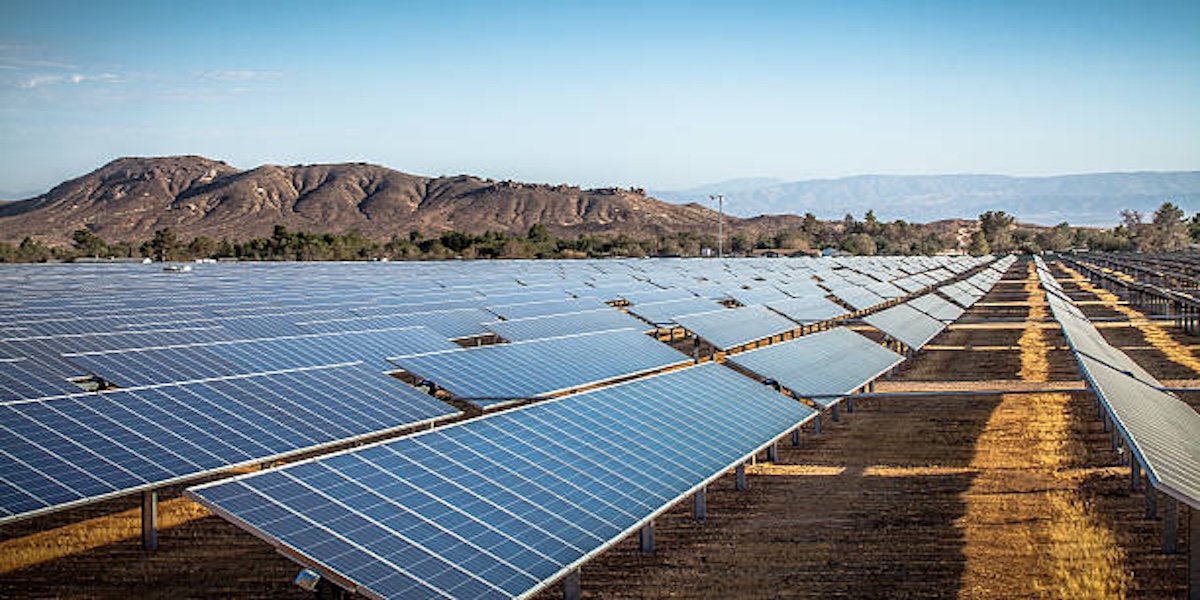
For five years running, the U.S. has installed more solar capacity than any other type of power generation. Yet for most of that boom, the cell — the component that actually converts sunlight into electricity — has been manufactured almost entirely overseas. American factories could assemble finished panels, but the critical piece at the heart of each one came from somewhere else.
Now, inside a sprawling, L-shaped factory in Cartersville, Georgia, that long-standing gap is beginning to close.
The U.S. solar boom has been real and sustained. But American factories were handling the easier part of the job. Panel assembly scaled up quickly, and by the time the Cartersville factory came online, the U.S. had enough assembly capacity to produce nearly 70 gigawatts of finished panels annually, according to the Solar Energy Industries Association — far exceeding what the country installs in a single year.
Solar cells were a different story. Before QCells began production, only three U.S. companies made them: Suniva in Georgia, and ES Foundry and Silfab in South Carolina. Their combined operational capacity sat at roughly 3 gigawatts. The cell remained the weak link in an otherwise expanding domestic supply chain.
The Biden administration recognized this gap. The Inflation Reduction Act introduced manufacturing tax credits for domestic cell producers and domestic-content bonuses for developers who buy American-made components — explicitly designed to pull cell production back to the U.S. after years of ceding that ground to overseas competitors, particularly China.
Read the article.