

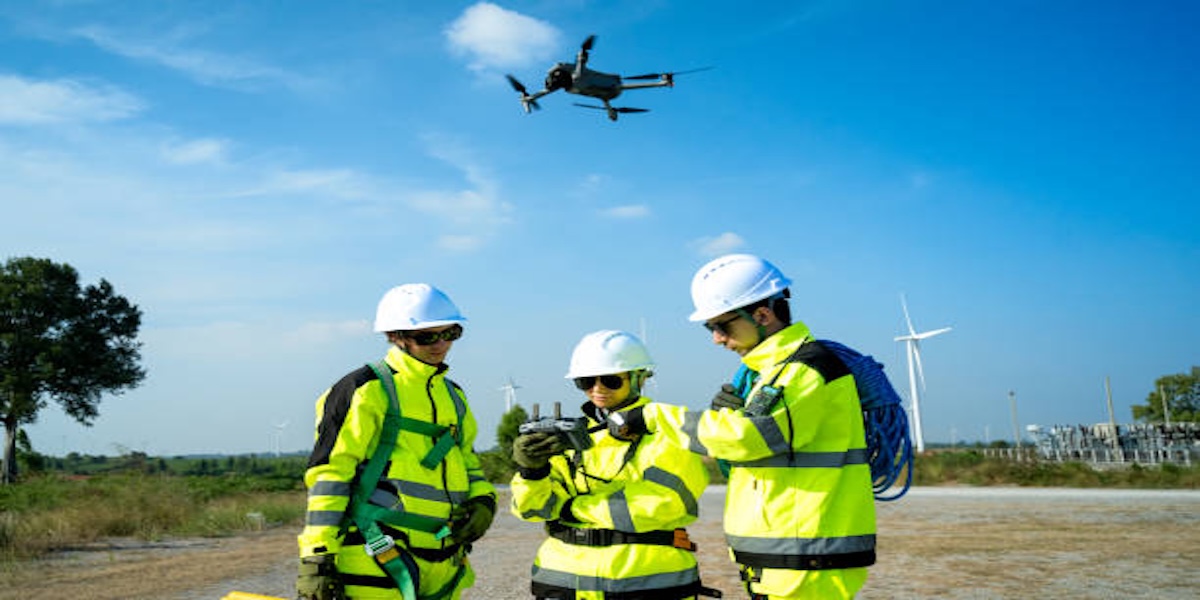
The state, known for making cars, is spending millions to entice drone manufacturers that can bring new business to auto suppliers.
Thanks to ramped-up military spending on drones and their proliferation in civilian uses, the market for American-made unmanned aerial systems is expected to grow to more than $50 billion by 2030, from $5 billion this year, according to Austin Bohlig, a senior analyst who specializes in drones at Needham & Company, a Minnesota-based investment banking firm.
Recent federal restrictions on new models from DJI, the Chinese company that makes at least 80 percent of the hobbyist and commercial drones that Americans fly, have created an opening for domestic manufacturers.
Companies are scrambling to build a supply chain from scratch, and states are vying to be at the center of it. In July, Gov. Gretchen Whitmer of Michigan, a Democrat, issued an executive directive calling for a statewide effort to scale up “advanced air mobility” manufacturing, which includes drones and electric planes.
The state spent at least $14 million in 2025 to boost the drone industry, according to recent press statements. Projects included testing whether drones could be used to collect medical samples from rural patients, deliver auto parts to car dealerships and resupply ships on Lake Michigan, according to a recent report.
Editors’ Picks
Birdstop, a start-up that makes drones that monitor electrical wires and other infrastructure, moved in six months ago. Its three dozen employees don’t fill the complex, which includes a garage with 900 parking spaces and a 375-seat auditorium. But room to grow was a key selling point when the company moved its manufacturing here from Alabama and its headquarters from California.
“We were searching for a building that could become the epicenter of the U.S. drone industry,” he said. “Frankly, we wouldn’t be able to afford 420,000 square feet in downtown San Francisco.”
Read the article.