

The United States lags far behind China when it comes to the manufacture of high-tech batteries, solar panels and communications systems. But even as Washington struggles to catch up in the manufacturing arena, Beijing is also consolidating its hold over the critical minerals that underpin these advanced industries.
In response, Washington is now trying to expand domestic mining and processing. But policymakers still face a self-inflicted wound—the loss of recovered materials and manufacturing scrap that could be used domestically rather than exported overseas.
In the past year, the Trump administration has announced steps to jumpstart U.S. mining, including investments in rare earth production and a “Project Vault” to stockpile key minerals. However, the ongoing export of scrap materials—and the subsequent re-import of them as refined products—is deepening America’s overall dependence on foreign processing.
In response, it’s time to make recycling a more prominent part of U.S. industrial policy.
In July, the Trump administration issued a determination regarding recoverable critical minerals and materials (CMMs). In particular, the president noted that the United States “relies heavily on imports of certain CMMs from foreign sources, and this reliance threatens serious, sustained supply chain disruptions.”
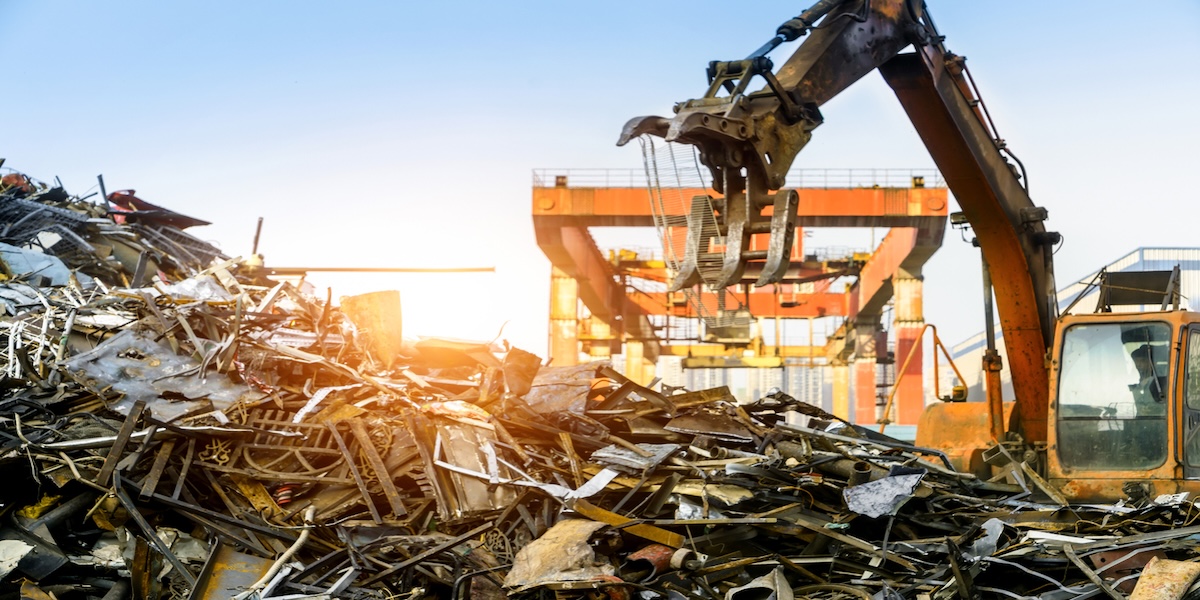
The answer is to treat recovered batteries, manufacturing scrap and other secondary materials as strategic feedstocks rather than mere waste streams. Collecting and processing these materials—including the battery scrap known as “black mass”—can provide domestic sources of materials that would otherwise be exported for processing.
Lead batteries offer a good example. Recycled lead is a key input for new batteries used in transportation, telecommunications, power systems and military applications. In 2025, recycled lead met the equivalent of 70% of domestic consumption. And nearly all of that secondary lead came from recycled batteries. But those spent lead-acid batteries also contain recoverable antimony and tin, making them particularly useful for other industrial applications.
Although the United States isn’t resource-poor, it’s still constrained by limited refining and processing capacity. Contrast that with China, which is expanding its dominance over global refining. It’s estimated that China now refines 73% of the world’s cobalt, 68% of nickel and 59% of lithium.
This leverage can create acute vulnerabilities. Beijing understands this—and happily exploited America’s dependence in late 2024, when it restricted antimony exports. As a result, global exports fell to roughly one-third of prior levels; prices rose more than four times their historical average.
Read the article.