

Key Takeaways
American tool manufacturing’s decline traces back to specific trade policy decisions made in the 1990s, not a sudden market shift.
Retail giants like Home Depot and Walmart played a direct role in forcing domestic manufacturers to offshore production or lose shelf space.
The collapse didn’t just cost jobs — it erased generational apprenticeship knowledge that cannot be quickly rebuilt.
A handful of American brands like Channellock and Klein Tools survived by focusing on professional-grade niches that cheap imports couldn’t easily match.
Reshoring domestic tool production faces infrastructure gaps that make a full revival far more complicated than the original offshoring ever was.
Walk into any hardware store today and you’ll find walls of tools stamped with familiar American brand names — but flip most of them over and the fine print tells a different story. Made in China. Assembled in Taiwan. Imported components. Most people assume this happened because overseas factories were simply cheaper and American companies had no choice. The real story is more complicated, and in many ways more deliberate. The dismantling of American tool manufacturing was set in motion by a chain of trade deals, retail pressure, and business decisions that unfolded over thirty years — while the factories were still running.
The Wrench That Built a Nation
When American tools were the gold standard the world measured against
After World War II, American tool manufacturing was one of the most productive industries in the world. Factory towns across Connecticut, Ohio, and Pennsylvania weren’t just making a living — they were setting the global benchmark for quality. Brands like Snap-on, Stanley, and Craftsman became household names not through advertising alone, but because the tools genuinely lasted. A mechanic who bought a Snap-on socket set in 1955 might still be using it today.
The workforce behind those tools was equally skilled. Machinists, metallurgists, and tool-and-die makers trained through multi-year apprenticeships, passing down precision techniques the way a tradesman passes down a trade. Factory towns in places like Waterbury, Connecticut and Elyria, Ohio built entire civic identities around their plants.
What’s easy to miss looking back is that the collapse didn’t begin when the factories went quiet. It began when the policies and purchasing decisions that had always protected those factories started quietly shifting — and by the time most workers noticed, the damage was already done.
Trade Deals Rewrote the Factory Floor
Two policy decisions in seven years changed everything for domestic manufacturers
The two biggest turning points in American tool manufacturing weren’t technological — they were political. When NAFTA passed in 1994, it opened the door for manufacturers to source components from Mexico at dramatically lower labor costs. Then in 2001, China’s entry into the World Trade Organization made overseas production even cheaper, flooding the market with tools priced well below what any American factory could match.
The effect on mid-size manufacturers was fast and measurable. A hand tool plant in Pennsylvania that had sourced its steel domestically for decades began contracting with Taiwanese component suppliers within two years of NAFTA passing. Labor costs dropped by roughly 40% — but so did the domestic workforce. Machinists who had worked those lines for twenty years found themselves without a job before the decade was out.
What made these shifts so consequential wasn’t just the cost math. It was that once a manufacturer moved production overseas, rebuilding domestic supply chains became increasingly difficult. Tooling, relationships, and institutional knowledge all migrated with the work — and research shows that U.S. manufacturing employment fell by nearly 5 million jobs between 2000 and 2010, with tool and hardware production among the hardest-hit sectors.
Big Box Stores Squeezed the Last Holdouts
It wasn’t just foreign competition — the pressure came from American retailers too
There’s a common assumption that overseas manufacturing killed American tool brands. That’s only half the story. The other half happened in the wholesale negotiations between domestic manufacturers and the big box retailers that were rapidly consolidating in the late 1990s.
When Home Depot and Walmart became the dominant buyers of hand tools in America, they wielded enormous leverage over pricing. Manufacturers who wanted shelf space — and without it, survival was nearly impossible — had to meet the retailers’ wholesale price targets. For many companies, the only way to hit those numbers was to move production offshore. It wasn’t a choice between profit and patriotism. It was a choice between offshoring and going out of business.
Craftsman is one of the most telling examples. For decades, Craftsman tools were made with American steel and carried a lifetime warranty that meant something because the quality backed it up. But as Sears faced its own financial pressures and big box competition intensified, Craftsman’s sourcing quietly shifted. The brand name stayed American. The steel didn’t. By the time most loyal customers noticed the difference in feel and finish, the domestic production lines had already been wound down.
What Got Lost Beyond the Jobs
The real casualty wasn’t just employment — it was knowledge that took generations to build
The job losses from manufacturing’s decline are well documented. Less talked about is what disappeared alongside the jobs: a living chain of trade knowledge that had been passed down through apprenticeships for generations.
Waterbury, Connecticut — once known as the brass capital of the world — is a good example. At its peak, Waterbury’s factories employed tens of thousands of workers in precision metalworking, producing everything from buttons and ammunition casings to industrial components and hand tools. The machinists who worked those lines didn’t learn their craft from a manual. They learned it from the person standing next to them, who had learned it from someone before them.
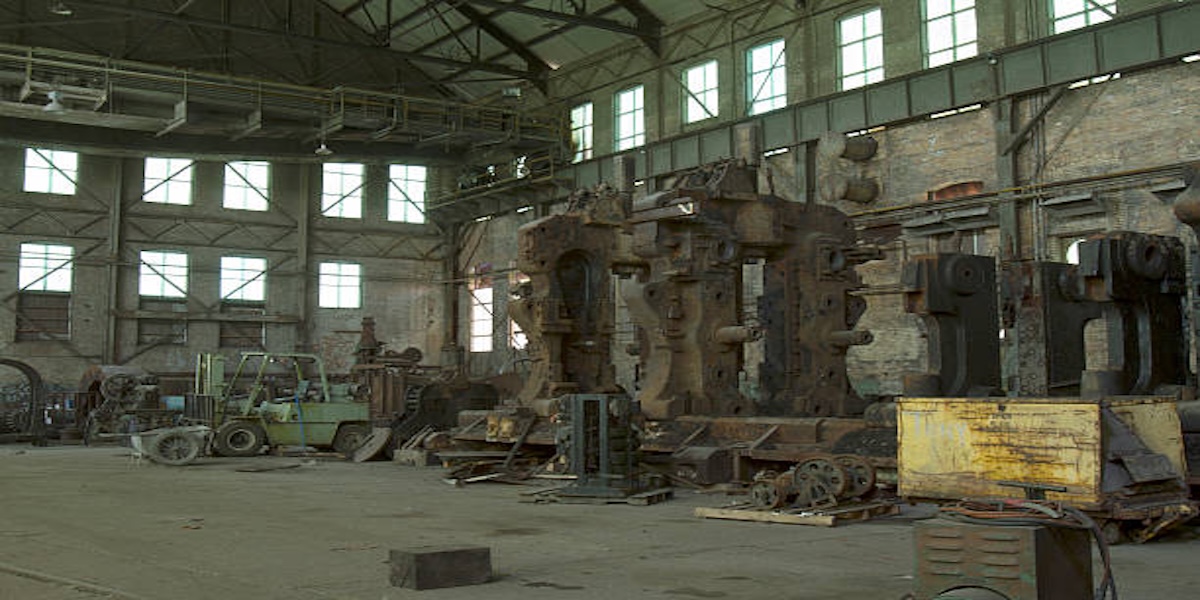
When plants closed, that pipeline broke. Apprenticeship programs that fed skilled workers into the tool industry collapsed almost overnight. Retired toolmakers who grew up in those factories describe a specific kind of knowledge — how a particular steel alloy behaves under a particular press, how to read the sound of a machine running true versus running wrong — that simply isn’t written down anywhere. Experienced woodworkers still reach for 50-year-old hand tools over new ones, a preference that reflects the depth of knowledge embedded in those older tools and the craftspeople who made them.
A Few American Makers Refused to Quit
Some brands held the line by building tools that cheap imports simply couldn’t replicate
Not every American tool manufacturer followed the offshore path. A small group of companies made a different bet: stay domestic, go premium, and compete on quality rather than price. That strategy turned out to be a survival plan.
Channellock, based in Meadville, Pennsylvania, has been making pliers in the same town since 1886. The company never moved production overseas, and its tools remain a benchmark for professional tradespeople who know the difference between a plier that holds and one that slips. Klein Tools, headquartered in Illinois, took a similar approach — focusing on electricians and linemen who depend on their tools in high-stakes conditions where a failure isn’t just inconvenient. Klein Tools manufactures over 80% of its products in the United States as of 2024, a figure that stands out sharply against the broader industry.
What these companies understood was that professional tradespeople buy differently than weekend DIYers. A journeyman electrician doesn’t pick a tool off the shelf because it’s $4 cheaper. He picks it because he knows it won’t let him down on a job site. That customer loyalty, built on genuine performance, gave companies like Channellock and Klein a market segment that homeowners who still buy American-made tools also understand and value.
Reshoring Efforts Face an Uphill Battle
Rebuilding what was dismantled turns out to be far harder than taking it apart
There’s been genuine political momentum in recent years around bringing manufacturing back to American soil. The 2022 CHIPS and Science Act directed billions toward domestic production capacity, and tariff policies under multiple administrations have tried to make overseas manufacturing less attractive. But for hand tools specifically, the path back is steeper than the rhetoric suggests.
One of the most concrete obstacles is steel. The U.S. currently lacks sufficient domestic steel rolling capacity to supply a full-scale hand tool revival. The specialized mills that once fed tool factories in the Midwest have largely been shuttered or repurposed. Rebuilding that infrastructure takes years and billions of dollars — and investors are cautious about committing to industries where the policy environment can shift with an election.
There’s also the workforce gap. The manufacturing sector faces a projected shortage of 2.1 million skilled workers by 2030, according to industry analysts, with tool and die makers among the hardest positions to fill. Training programs exist, but rebuilding a skilled trades workforce that took decades to develop doesn’t happen in a single budget cycle. The companies trying to reshore aren’t just buying new equipment — they’re trying to recreate an entire ecosystem that was allowed to atrophy.
What Smart Buyers Can Do Right Now
Reading labels carefully and buying once often beats buying cheap twice
If you want to support what’s left of American tool manufacturing, the first skill to develop is reading country-of-origin labels with a critical eye. A tool marked ‘Assembled in USA’ is not the same as one marked ‘Made in USA.’ The Federal Trade Commission requires that a ‘Made in USA’ claim mean all or virtually all of the product was made domestically — but ‘assembled’ can mean foreign components were put together on American soil, with most of the manufacturing value created overseas.
Brands worth looking for include Channellock, Klein Tools, Starrett (precision measuring tools, made in Massachusetts), and Estwing (hammers and axes, made in Rockford, Illinois since 1923). These aren’t budget options, but most professional tradespeople will tell you that a quality tool bought once outlasts three cheap tools bought in succession — and the math often favors the better purchase.
It’s also worth knowing that some major brands now operate on a split model — manufacturing their professional lines domestically while sourcing consumer-grade products overseas under the same name. Snap-on’s professional socket sets, for example, are still made in the U.S., while some of the brand’s consumer-facing products sold through big box stores are not. Knowing which tier you’re buying from matters more than the brand name alone.
Practical Strategies
Check the FTC Label Standard
Look for ‘Made in USA’ rather than ‘Assembled in USA’ — the difference is legally meaningful. The FTC’s standard requires that virtually all content and processing be domestic for a full ‘Made in USA’ claim, so that phrase carries real weight when you see it.:
Prioritize Professional-Grade Lines
Many brands now produce both consumer and professional versions of the same tool, often under the same name but with different sourcing. Ask at a trade supply counter rather than a big box store — counter staff typically know which lines are still domestic and which aren’t.:
Invest in Lifetime Warranty Tools
Companies like Channellock and Estwing still back their American-made tools with warranties that reflect genuine confidence in the product. A tool with a real lifetime warranty from a company that’s been in business for over a century is a different proposition than a warranty printed on packaging from a brand that may not exist in ten years.:
Buy Used American Iron
Vintage American-made tools from the 1950s through 1980s — Stanley planes, Snap-on sockets, Craftsman wrenches from that era — are still widely available at estate sales, flea markets, and online. The metallurgy from that period is often superior to what’s made today, and a well-maintained vintage tool can outperform a new import at a fraction of the retail cost.:
Support Regional Tool Makers
Beyond the well-known names, smaller regional manufacturers still produce specialized tools domestically — particularly in the Northeast and Midwest. A quick search for the specific tool type plus ‘made in USA’ will often surface companies that don’t have big marketing budgets but still run American production lines.:
The story of American tool manufacturing isn’t a tragedy without a lesson — it’s a case study in how policy, retail power, and short-term cost thinking can quietly dismantle something that took generations to build. The good news is that a meaningful remnant of domestic production still exists, held together by companies that bet on quality over convenience and customers who understood the difference. Every purchase from a brand that still makes its tools in America is a small vote for keeping that remnant alive. And for readers who grew up with a Craftsman wrench in the garage or a pair of Channellocks on the workbench, knowing which names still stand behind their American roots is worth more than any coupon.
Read the article.